Why the theme Ancient Egypt makes a good book
An adventure that suits the child
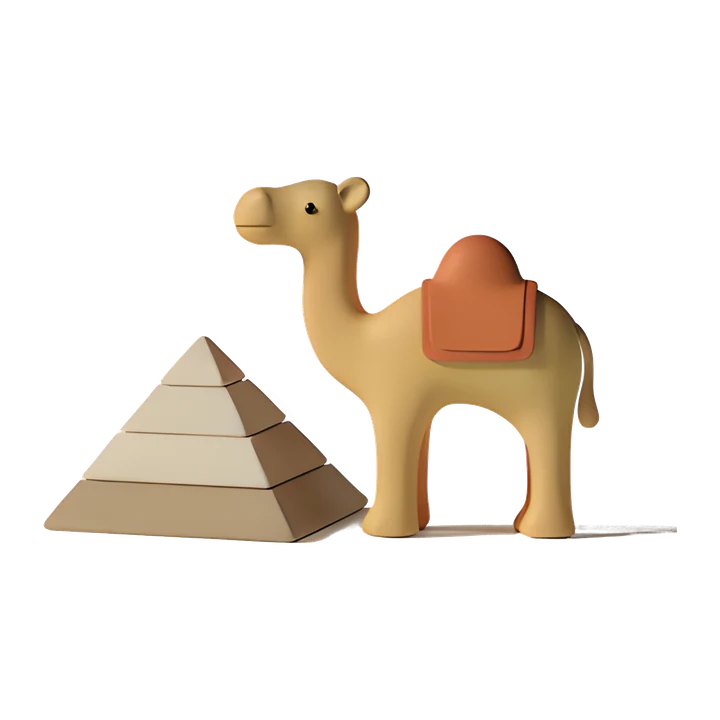
Ancient Egypt has everything that makes a child's eyes go wide: pyramids, mummies, gold and a written language made of pictures. At the same time it was a real place with a real history, which makes travelling there in a book all the more exciting. Your child can walk along the Nile, see how people lived thousands of years ago and solve a puzzle written in hieroglyphs. It raises questions – how did they build the pyramids, why did they make mummies? – and the book becomes the start of conversations that can go on for a long time.
On the banks of the Nile
In a book about ancient Egypt your child can follow a scribe and learn a few hieroglyphs, sail on the Nile in a boat made of papyrus reeds or lend a hand as the workers haul blocks of stone towards a pyramid. Perhaps a temple cat has gone missing, or Pharaoh needs someone to find the way through a maze of passages. The adventure itself is made up, while papyrus, mummies, scarabs and pyramids all belong to that time. Your child can also join a festival when the river rises, or help a farmer save the harvest from a swarm of locusts.
A museum visit that becomes a journey
If your child has seen a mummy in a museum, or has a book about pyramids that gets read over and over, tell us about it. A love of animals can become a cat, an ibis or a crocodile in the Nile. A brother or sister can come along as a trainee scribe, and a grandparent as the wise priest or priestess who knows where the treasure is hidden.
For younger children it's shapes and animals that carry the story: triangles of stone, crocodiles, a big yellow sun. Pre-schoolers love sailing down the river to a pyramid and home again. Six-year-olds can be given a real hieroglyph puzzle, and ten-year-olds enjoy finding out more about how people lived, what they ate and what they believed in.
The river that turned the desert green
Almost everything in ancient Egypt depended on the Nile. Every year the river rose and flooded, and when the water drew back it left a layer of rich soil where farmers could grow their crops. The great pyramids at Giza were built as tombs for pharaohs more than 4,500 years ago. Invent your own picture symbols and write your child's name with them, one symbol for each sound – some hieroglyphs worked exactly like that. The Egyptians held cats in high regard, and cats often appear in their art.
Your child is the hero
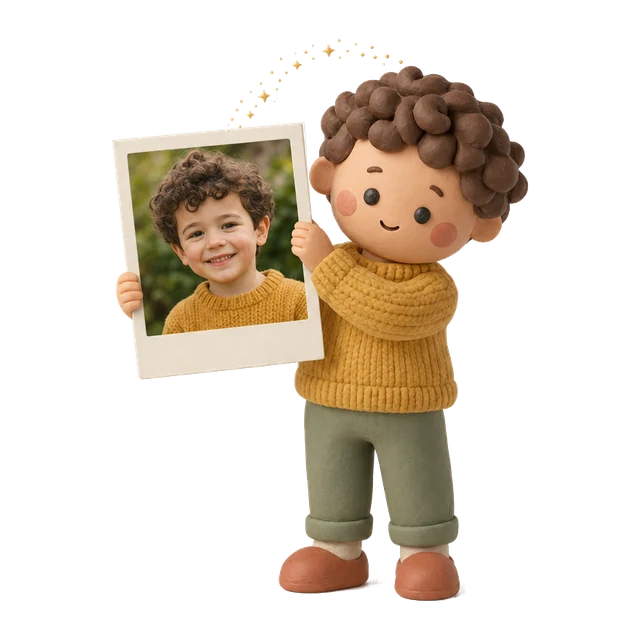
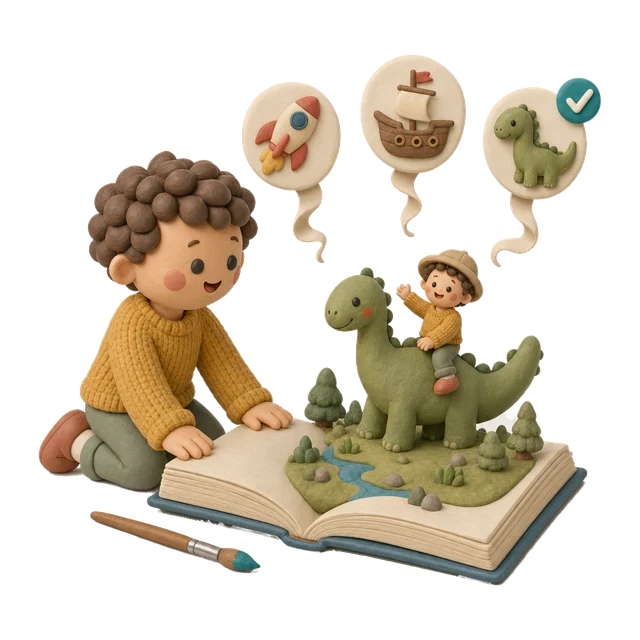
You fill in the child's name, age and what they like, and upload a photo. The story about ancient Egypt is written for your very own child, and the thirteen pictures and the cover are drawn from the photo in the style you choose. Brothers and sisters, parents, grandparents or the pet can come along, up to five characters. If you would like to include something that has happened lately, a trip or a lost tooth, just write it and it is woven in.
From eBook to hardback book
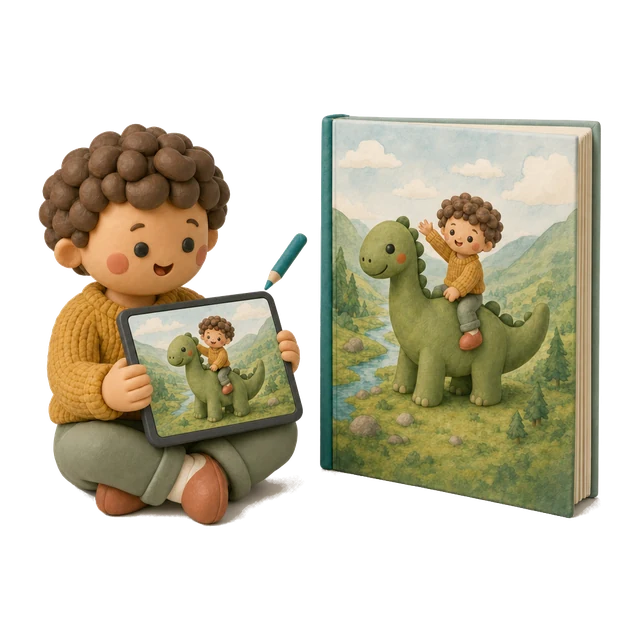
The eBook is ready a few minutes after payment. Read it, change the text and ask for new pictures until you are happy. Then order it as an A4 hardback book, printed and sent to your door, or straight to the child as a gift. Do add the audiobook or the colouring pages. Start creating the book or read more about the prices. Would you like to see a finished book before you decide? Browse our example books.
How the story could begin
The sand is so hot you can feel it through your sandals. In front of you flows a broad, brown river, and along its bank grow tall reeds with shaggy tops. That's papyrus, says a boy standing in the shallows fishing with a spear. His name is Nebi and he has a kitten in his arms. “You're not from round here,” he says, looking at your clothes. “Have you come to help the scribe? He's lost a word.” He takes your hand and pulls you up towards a white house with palm trees outside. Inside sits an old man with a scroll on his lap. The scroll is full of tiny pictures: eyes, birds, waves and a little owl. In the middle of the line there's an empty gap. “Without that word,” says the scribe, “nobody can read where Pharaoh's burial chamber lies.”
 Christmas
 Birthday
 Unicorns
 Dinosaurs
 Pirates
 Space
 Princes and princesses
 Fire brigade
 Sport
 Mermaids
 Superheroes
 Knights and dragons
 Construction vehicles
 Starting school
 A trip to the farm
 Jungle
 Fairies
 Treasure hunt
 Underwater
 A new baby
 Brushing teeth
 Confidence
 Bedtime story
 The enchanted forest
 Witches and spells
 Giants
 Gnomes
 Wizard school
 Camping
 Time travel
 Haunted house
 Police
 Racing
 Aeroplanes
 Secret mission
 The zoo
 Dressing up
 Building a tree house
 The amusement park
 A train journey
 A visit to the doctor
 The dentist
 The library
 The beach
 The forest
 Baking
 Music
 Dance
 Ancient Egypt
 The Stone Age
 The Vikings
 In the future
 The Middle Ages
 Candy land
 At the North Pole
 The savannah
 Easter
 Halloween
 Lucia
 Midsummer
 New Year
 Name day
 Eid
 Hanukkah
 Becoming a big brother or sister
 Father's Day
 Mother's Day
 Grandparents
 A new pet
 Moving house
 Sleepovers
 A wedding
 Holiday
 Learning to ride a bike
 Giving up the dummy
 Potty training
 Tidying up
 Eating well
 Learning to tell the time
 Learning to count
 The alphabet
 Seasons and weather
 Afraid of the dark
 Tantrums
 Feeling homesick
 Being teased
 Jealousy
 Feeling proud
 Handling big feelings
 Funny story
 Olivia
 Muhammad