Why the theme Name day makes a good book
An adventure that suits the child
A name day is a smaller celebration than a birthday, and that is exactly what makes it lovely. It often turns up in the middle of an ordinary week, and suddenly there's a flower on the breakfast table and a little flag in the window. For a child it's a discovery: my name is in the calendar, and there's a day that belongs to me. A book about a name day gives the name a story of its own. It can also tell why your child was given the name they have – something many children want to hear again and again.
A name with a story of its own
A name-day book can be about the day itself: the breakfast, the flower, the flag, perhaps a cake or a small present. But it can also make the name the main character – an adventure in which the letters lead your child around town, or a journey back in time to the person your child was named after.
Perhaps your child meets someone else who shares the same day, and they discover they are completely different in every other way. The book can also play with how the name sounds and looks: when Grandma calls it across the garden, when it's written with a stick in the snow, when it's made to rhyme with something silly.
Why is your child called that?
This is the question that makes the book personal. Write in the story behind the name, if there is one: a grandmother who had the same name, a song you loved, a word from another language, a name you simply couldn't let go of. Write in which date you celebrate. If your child has a nickname the whole family uses, include that too, because it often has a little story of its own.
If your child's name isn't on any name-day calendar, as is true of a great many names, you can choose a day of your own. It can become a family tradition and part of the story.
Names in the calendar
In Sweden, as in Poland, Greece and many other countries, almost every day of the calendar has one or more names. The oldest come from the calendar of saints' days, and the lists have changed many times over the years as new names have become popular. A little flag on the breakfast table is a common way to mark the day in Sweden, but a single flower goes a long way too.
For the youngest, the book is about hearing their own name many times, ideally in a rhythm you can clap. Children who are learning to read love hunting for their letters on every page, and older children are often curious about what the name means. Look it up together after reading and write the answer at the back of the book.
Your child is the hero
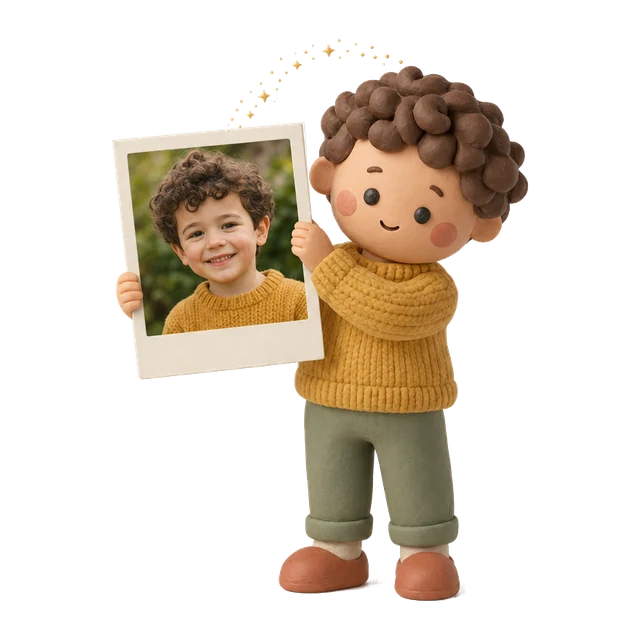
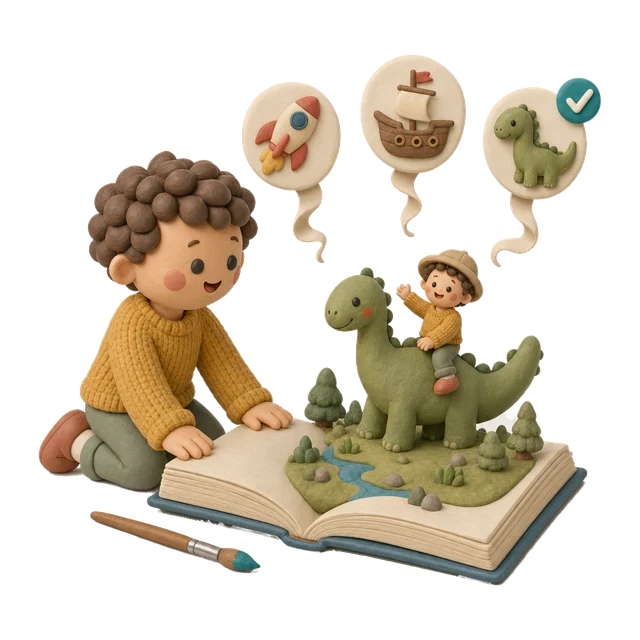
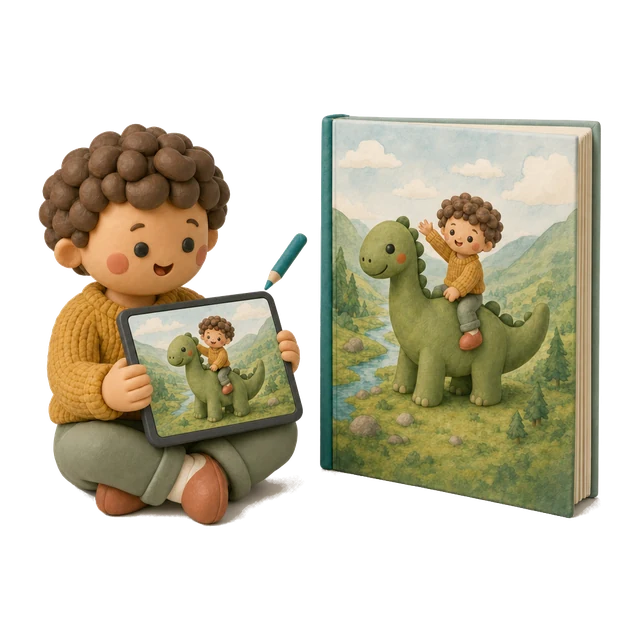
You fill in the child's name, age and what they like, and upload a photo. The story about a name day is written for your very own child, and the thirteen pictures and the cover are drawn from the photo in the style you choose. Brothers and sisters, parents, grandparents or the pet can come along, up to five characters. If you would like to include something that has happened lately, a trip or a lost tooth, just write it and it is woven in.
From eBook to hardback book
The eBook is ready a few minutes after payment. Read it, change the text and ask for new pictures until you are happy. Then order it as an A4 hardback book, printed and sent to your door, or straight to the child as a gift. Do add the audiobook or the colouring pages. Start creating the book or read more about the prices. Would you like to see a finished book before you decide? Browse our example books.
How the story could begin
When you come down to breakfast, there's a flower by your plate. Just one, yellow, in a slim glass. You look at it. It isn't your birthday. It's a Tuesday. “Have a look at the calendar,” someone says, nodding towards the fridge. You walk over. There, among all the other days with all their other names, is yours. Spelt exactly the way you write it. It feels like finding your name on a note in a bottle. You read it out loud, and then something strange happens. The letters on the calendar begin to glow, faintly, like a torch under a duvet. Then the first letter peels away from the paper and floats out into the kitchen. It flies towards the hall, stops at the front door and waits, as if it wants you to follow.
 Christmas
 Birthday
 Unicorns
 Dinosaurs
 Pirates
 Space
 Princes and princesses
 Fire brigade
 Sport
 Mermaids
 Superheroes
 Knights and dragons
 Construction vehicles
 Starting school
 A trip to the farm
 Jungle
 Fairies
 Treasure hunt
 Underwater
 A new baby
 Brushing teeth
 Confidence
 Bedtime story
 The enchanted forest
 Witches and spells
 Giants
 Gnomes
 Wizard school
 Camping
 Time travel
 Haunted house
 Police
 Racing
 Aeroplanes
 Secret mission
 The zoo
 Dressing up
 Building a tree house
 The amusement park
 A train journey
 A visit to the doctor
 The dentist
 The library
 The beach
 The forest
 Baking
 Music
 Dance
 Ancient Egypt
 The Stone Age
 The Vikings
 In the future
 The Middle Ages
 Candy land
 At the North Pole
 The savannah
 Easter
 Halloween
 Lucia
 Midsummer
 New Year
 Name day
 Eid
 Hanukkah
 Becoming a big brother or sister
 Father's Day
 Mother's Day
 Grandparents
 A new pet
 Moving house
 Sleepovers
 A wedding
 Holiday
 Learning to ride a bike
 Giving up the dummy
 Potty training
 Tidying up
 Eating well
 Learning to tell the time
 Learning to count
 The alphabet
 Seasons and weather
 Afraid of the dark
 Tantrums
 Feeling homesick
 Being teased
 Jealousy
 Feeling proud
 Handling big feelings
 Funny story
 Olivia
 Muhammad