Why the theme Gnomes makes a good book
An adventure that suits the child
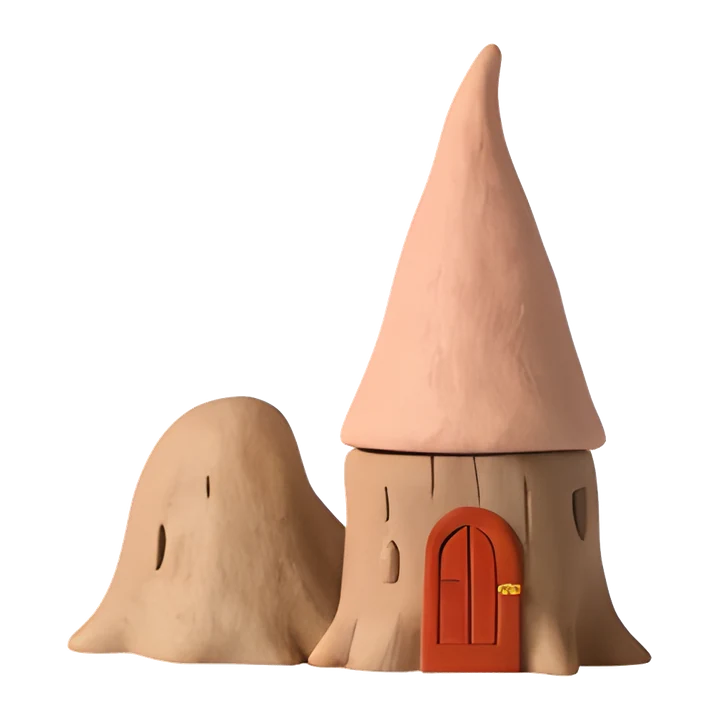
Gnomes are little folk who live close to people. In the old tales they live under the floorboards, in the barn or inside an old tree, and keep an eye on things to make sure everything is done properly. That makes them both exciting and comforting for a child: someone small and secret is right there, just out of sight. In a book about gnomes, your child gets to be the one who discovers them, and the one they decide to trust. It becomes a story packed with tiny details to point at – ladders made of matchsticks, hats made of thimbles, a kitchen inside a tree root.
The gnomes' secret work
A book about gnomes can take your child down under the floor to see where all the lost socks end up, help a gnome family move house when their barn is about to be pulled down, or guard the hens one night while the fox prowls about. Perhaps the gnomes need someone big enough to lift a saucepan, and your child gets to join them as they cook over a candle flame. Gnomes have their rules, and part of the thrill is learning them. A gnome might also have lost his hat, and without it he can suddenly be seen by everyone in the house.
Your house, their house
Gnomes live where people live, so the book works best when it looks like your home. Tell us about the loft, the cellar or the shed where nobody quite knows what is in there, about the cat that stares into one particular corner, about things that keep going missing. If you have a holiday cottage, a grandad with an old barn or an apple tree in the garden, the gnomes can live right there. Every detail you add can become a clue.
The youngest listeners love hunting for the little door in every picture. Slightly older children want to know what gnomes eat and where they sleep. School-age children enjoy being told a secret and keeping it, and for older ones it adds excitement that the gnomes are not always in a good mood.
Old beliefs, new games
In old Scandinavian farm lore, many farms had a gnome of their own. He helped out if he was treated well and could cause all sorts of trouble if he was not. On Christmas Eve families put out a bowl of porridge for him, and many homes still do. Britain had its own version in the brownie, a household helper who was thanked with a bowl of cream. Why not build your own gnome door by a tree root or a skirting board and leave a raisin out in the evening? If you would like a festive gnome, there is more under Christmas. Talk about what a gnome might need help with in your home, and what you would like a hand with yourselves.
Your child is the hero
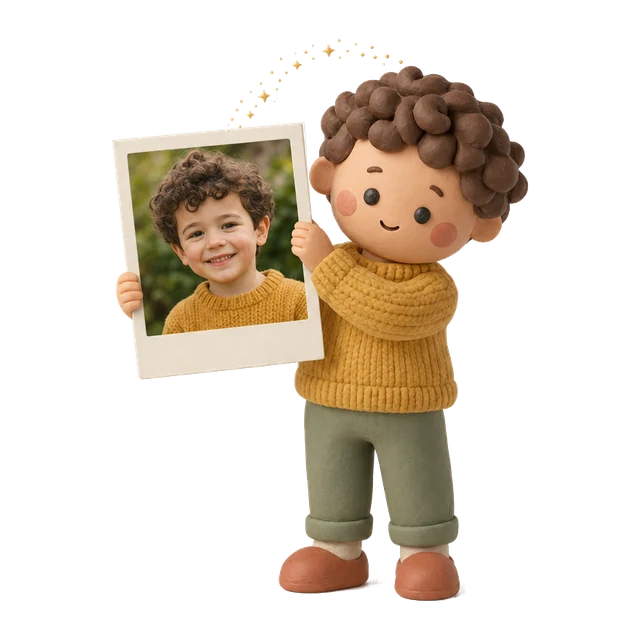
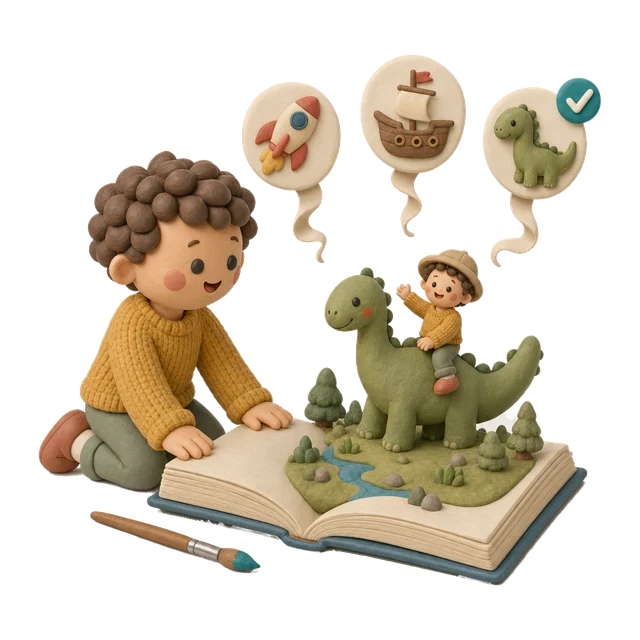
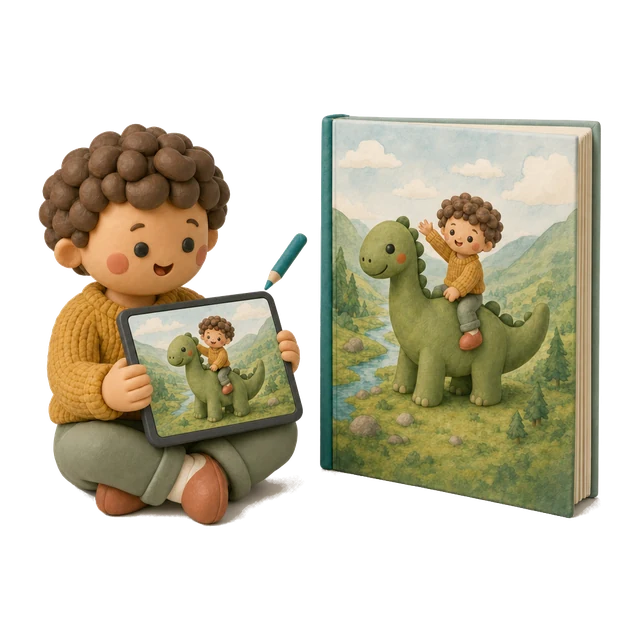
You fill in the child's name, age and what they like, and upload a photo. The story about gnomes is written for your very own child, and the thirteen pictures and the cover are drawn from the photo in the style you choose. Brothers and sisters, parents, grandparents or the pet can come along, up to five characters. If you would like to include something that has happened lately, a trip or a lost tooth, just write it and it is woven in.
From eBook to hardback book
The eBook is ready a few minutes after payment. Read it, change the text and ask for new pictures until you are happy. Then order it as an A4 hardback book, printed and sent to your door, or straight to the child as a gift. Do add the audiobook or the colouring pages. Start creating the book or read more about the prices. Would you like to see a finished book before you decide? Browse our example books.
How the story could begin
Someone has eaten the raisins. Not all of them, just three, and the bowl is still on the kitchen worktop exactly where you left it. Next to the bowl lies a teeny-tiny mitten of grey wool. You pick it up. It fits on the tip of your little finger. When everyone else is asleep, you creep out into the hall with a torch. The floor creaks, and then you hear something else: a tick-tick-tick, like someone tapping with a very small hammer. The sound is coming from behind the radiator. You lie down on your tummy and shine the torch in. There, in a gap by the skirting board, is a door with a handle made from a drawing pin. It is standing ajar. “Have you found my mitten?” says a voice. “Then you must be the one we've been looking for.”
 Christmas
 Birthday
 Unicorns
 Dinosaurs
 Pirates
 Space
 Princes and princesses
 Fire brigade
 Sport
 Mermaids
 Superheroes
 Knights and dragons
 Construction vehicles
 Starting school
 A trip to the farm
 Jungle
 Fairies
 Treasure hunt
 Underwater
 A new baby
 Brushing teeth
 Confidence
 Bedtime story
 The enchanted forest
 Witches and spells
 Giants
 Gnomes
 Wizard school
 Camping
 Time travel
 Haunted house
 Police
 Racing
 Aeroplanes
 Secret mission
 The zoo
 Dressing up
 Building a tree house
 The amusement park
 A train journey
 A visit to the doctor
 The dentist
 The library
 The beach
 The forest
 Baking
 Music
 Dance
 Ancient Egypt
 The Stone Age
 The Vikings
 In the future
 The Middle Ages
 Candy land
 At the North Pole
 The savannah
 Easter
 Halloween
 Lucia
 Midsummer
 New Year
 Name day
 Eid
 Hanukkah
 Becoming a big brother or sister
 Father's Day
 Mother's Day
 Grandparents
 A new pet
 Moving house
 Sleepovers
 A wedding
 Holiday
 Learning to ride a bike
 Giving up the dummy
 Potty training
 Tidying up
 Eating well
 Learning to tell the time
 Learning to count
 The alphabet
 Seasons and weather
 Afraid of the dark
 Tantrums
 Feeling homesick
 Being teased
 Jealousy
 Feeling proud
 Handling big feelings
 Funny story
 Olivia
 Muhammad